
Does Blue Cross Blue Shield Cover Out-of-Town Rehab? Your 2026 Verification Guide
If you're considering addiction treatment but wondering whether your Blue Cross Blue Shield plan covers rehab outside your immediate area, you're asking exactly the right question. The short answer? Yes, many BCBS plans do cover out-of-town treatment: and traveling for recovery might be one of the best decisions you make.
Whether you're in Houston, Dallas, Austin, or San Antonio, getting treatment away from the environment where addiction took hold can significantly improve your chances of long-term success. Let's break down how BCBS coverage works for out-of-town rehab and why distance from daily triggers matters so much.
Understanding BCBS Coverage for Treatment Outside Your Area
Blue Cross Blue Shield insurance is actually a federation of independent companies that operate in different regions across the country. The good news is that most BCBS plans recognize that quality addiction treatment might not always be available in your immediate zip code: and they've built coverage accordingly.
Your specific coverage for out-of-town rehab depends on several factors:
- Your plan type (Bronze, Silver, Gold, or Platinum)
- Whether the facility is in-network or out-of-network
- Your state's specific BCBS regulations
- The medical necessity of the treatment
Generally speaking, BCBS plans cover between 60% to 90% of treatment costs, with Bronze plans on the lower end and Platinum plans offering the most comprehensive coverage. Even if a facility is out-of-network, many plans still provide partial coverage: you'll just want to verify the specifics before admission.

What Types of Treatment Does BCBS Typically Cover?
Regardless of whether you choose treatment close to home or decide to travel to a facility in the Texas Hill Country, BCBS plans generally cover the full continuum of care:
Medical Detoxification: Usually 3-7 days, though this can be extended based on medical necessity. Medical detox is the critical first step that ensures you withdraw safely from substances under 24/7 medical supervision.
Residential or Inpatient Treatment: Typically covered for 30-90 days initially, with possible extensions approved on a case-by-case basis. This immersive level of care provides round-the-clock support in a structured environment.
Intensive Outpatient Programs (IOPs): For those who've completed residential treatment or need a step-down level of care while maintaining some daily responsibilities.
Partial Hospitalization Programs (PHPs): A bridge between residential and outpatient care, offering intensive daytime treatment while you return home in the evenings.
Medication-Assisted Treatment (MAT): Coverage for medications like buprenorphine, naltrexone, or methadone when medically appropriate for opioid or alcohol use disorders.
Aftercare and Continuing Support: Many plans cover ongoing outpatient therapy, support groups, and relapse prevention services.
The key is verifying your benefits for the specific facility you're considering. That's where insurance verification for rehab becomes essential: and it's something we handle for you.
Why Traveling for Treatment Actually Improves Your Chances
Here's something most people don't realize until they're deep in recovery: your environment matters just as much as the treatment itself. Sometimes staying in the same city where you developed your addiction keeps you tethered to the very things that feed it.
Think about it. When you're still close to home, you're surrounded by:
- The places where you used
- People who may still be using
- Stressful family dynamics that contributed to substance use
- Work environments that trigger anxiety or depression
- Easy access to dealers or old habits
Geographic separation creates psychological distance. When you choose treatment outside your immediate area: like leaving the chaos of a major city for the peace of the Hill Country: you're giving yourself permission to focus entirely on healing without the constant pull of your old life.

The Hill Country Advantage: Recovery as a Retreat
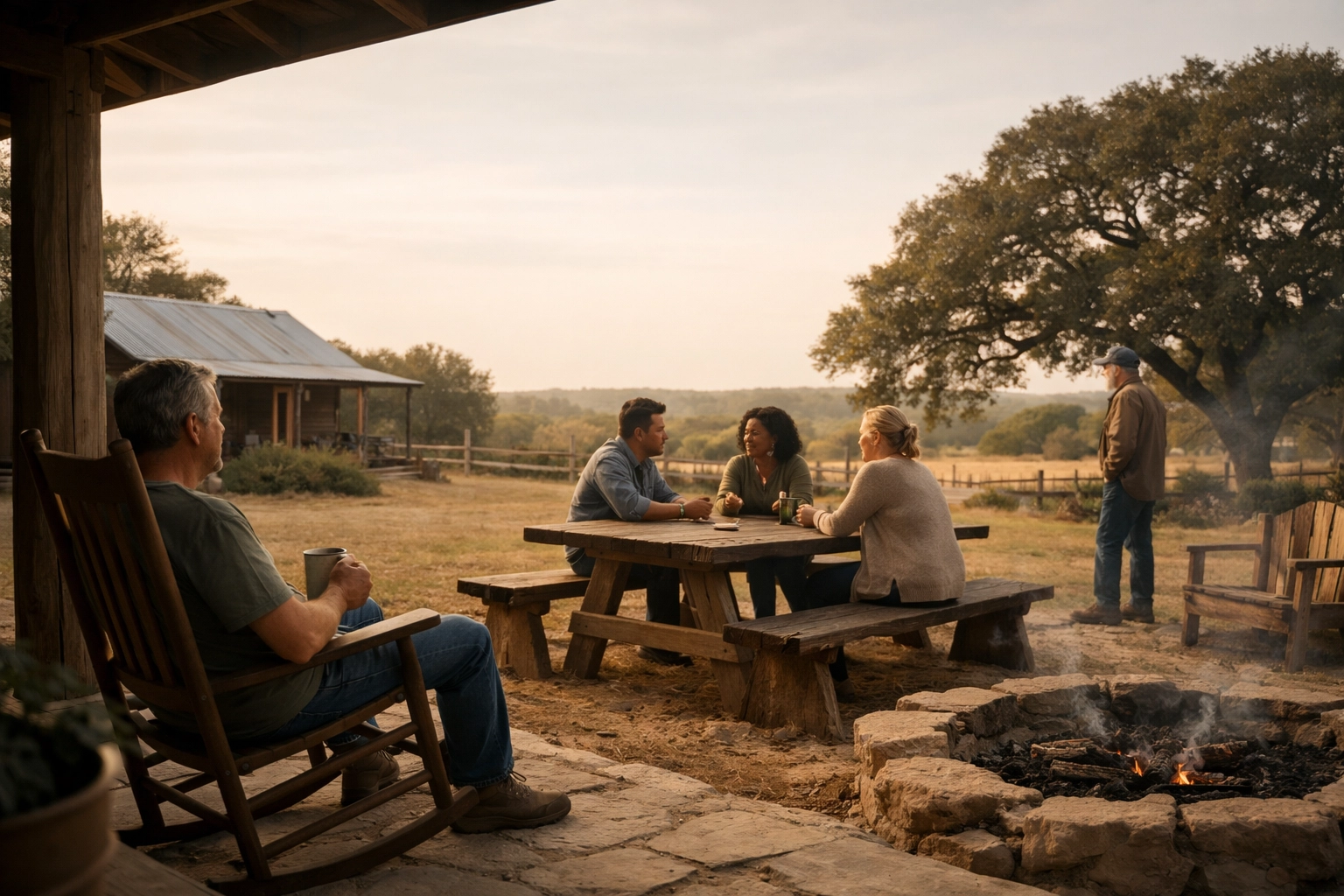
There's a reason people feel differently when they're surrounded by nature instead of concrete. The Texas Hill Country offers something you can't find in urban treatment centers: a genuine retreat setting that allows your nervous system to finally relax.
At facilities like Resurgence Texas, you're not just getting evidence-based treatment: you're experiencing recovery in an environment designed for healing. Rolling hills, quiet evenings, and distance from the triggers of city life create the mental space needed for real transformation.
Many of our clients tell us that the simple act of being somewhere new helped them see themselves differently. When you're not running into people from your past or driving by familiar haunts, it's easier to build a new identity: one not defined by addiction.
And here's the practical benefit: your BCBS plan likely covers this kind of treatment just as fully as it would cover a facility in your neighborhood. You're not sacrificing coverage for quality of environment: you can have both.
How to Verify Your BCBS Coverage for Out-of-Town Rehab
Before making any decisions, you'll want clear answers about what your plan covers. Here's how to approach the verification process:
Step 1: Gather Your Information
Have your BCBS member ID, group number, and the name of your specific plan ready. You'll also want to know whether you have an HMO, PPO, or EPO plan, as this affects out-of-network coverage.
Step 2: Contact the Facility Directly
Most reputable treatment centers offer free, confidential insurance verification. At Resurgence Texas, our admissions team handles this for you: we'll call BCBS on your behalf and get detailed information about:
- Your deductible and how much has been met
- Your copay or coinsurance responsibilities
- Coverage limits for different levels of care
- Whether preauthorization is required
- Out-of-network coverage percentages if applicable
Step 3: Ask Specific Questions
Don't just ask "Is treatment covered?" Get specifics:
- How many days of residential treatment are approved initially?
- What's the coverage for medical detox?
- Are there limitations on outpatient or aftercare services?
- What documentation is needed for continued stay authorization?
Step 4: Understand Your Out-of-Pocket Costs
Even with excellent insurance, you'll likely have some financial responsibility. Knowing this upfront prevents surprises and allows you to make informed decisions about payment plans or financing if needed.

What If Your BCBS Plan Has Limited Out-of-Town Coverage?
Even if your plan has restrictions on out-of-network providers, don't let that stop you from exploring out-of-town options. Many facilities can work within various coverage scenarios:
- Single-case agreements: Sometimes facilities can negotiate special coverage for your specific situation
- Partial coverage plus payment plans: You might cover a portion while insurance handles the rest
- Appeals process: If coverage is initially denied, facilities often help with the appeals process, especially when treatment outside your area is medically necessary
The reality is that addiction treatment: especially when it involves traveling to a setting conducive to recovery: often qualifies as medically necessary. If your area lacks quality trauma-informed care or specialized programs you need, that strengthens the case for coverage of out-of-town treatment.
The Role of Trauma-Informed Care in Long-Term Recovery
One often-overlooked aspect of choosing where to get treatment is finding a facility that addresses not just the addiction, but the underlying trauma that often fuels it. Many people don't realize that unresolved trauma: whether from childhood, relationships, or life circumstances: is a primary driver of substance use.
When you're selecting an out-of-town facility, look for programs offering comprehensive trauma-informed care. This approach recognizes that:
- Addiction is often a symptom, not the root problem
- Traditional talk therapy alone may not be enough
- Healing requires a safe environment where you feel genuinely supported
- Your past doesn't define your future, but it needs to be addressed
BCBS plans generally cover evidence-based trauma therapies like EMDR (Eye Movement Desensitization and Reprocessing), CBT (Cognitive Behavioral Therapy), and other modalities proven effective for co-occurring disorders. When verifying benefits, ask specifically about coverage for these therapeutic approaches.

Making the Decision: Is Out-of-Town Rehab Right for You?
Only you can answer this question, but consider these factors:
You might benefit from traveling for treatment if:
- You've tried local treatment before without lasting success
- Your home environment is filled with triggers and temptations
- You need privacy and distance from people who might judge your recovery
- You want to focus entirely on healing without daily life distractions
- You're drawn to a natural, retreat-like setting that promotes peace
Local treatment might make more sense if:
- You have young children or caregiving responsibilities that prevent you from leaving
- You've already established strong local recovery support systems
- Your job situation requires you to be nearby for partial hospitalization or IOP
- You have medical conditions requiring specific specialists in your area
There's no wrong answer: only what serves your recovery best. And remember, many people do a combination: residential treatment out of town followed by local outpatient care and support groups.
Your Next Step: Free Insurance Verification
If you're seriously considering out-of-town treatment and have Blue Cross Blue Shield coverage, the smartest move is getting a free, no-obligation benefits check. This gives you concrete information about what's covered, what you'll pay, and how quickly you can start treatment.
At Resurgence Texas, we make this process simple. Our admissions specialists are available 24/7 to verify your BCBS coverage, answer your questions, and help you understand your options. Within hours, you'll know exactly where you stand and can make an informed decision about your recovery journey.
Call us today at our confidential helpline: available anytime, day or night. We'll verify your insurance, discuss your unique situation, and help you determine if our Hill Country facility is the right fit for your recovery.
Sometimes the hardest part of getting help is simply making the call. But that call might be what finally separates you from the life that's been keeping you stuck: and connects you with the peaceful, healing environment where lasting recovery becomes possible.
Your BCBS coverage likely extends further than you think. Let's find out together what's possible when you give yourself permission to heal somewhere new.